
ஜோபா
Inspiring Sustainable Living
THINAI Course

What is THINAI?
THINAI is one app-based course that grows with you. Learn technology, culture, thinking, nature, the arts and innovation through hands-on projects, at any age.
THINAI is a Tamil Word for the lands and the ways of life that belong to them. We use it as a way of learning: Know the land, the people and yourself, then care for all three.
THINAI, the world in Tamil, stands for five lands and more. It carries an idea that where you live shapes how you life, work and think.
THINAI is also our six-part map of learning: Technology - Humanities - Intelligence - Nature - Aesthetics - Innovative Competencies
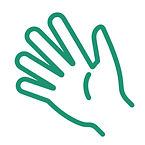
The open hand in our logo has five fingers. They stand for five great elements and five lands. Learning occurs when sensory inputs—sight, sound, touch, taste, and smell—are transformed into knowledge, enabling us to observe, listen, feel, savor, and perceive the world to build deep understanding and memory.The hand is also the hand of care: open to give, open to receive.

Five elements: Water, Land, Air, Space and Fire. The concept of the Five Great Elements represents the fundamental building blocks of nature and the physical cosmos across ancient philosophies.
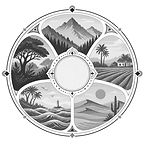
Five lands: The Thinai represent the five eco-zones or landscapes, each associated with a specific terrain, climate and lifestyle. 1. Kurinchi (Mountain Region) 2. Mullai (Forest/Pastoral Land) 3. Marutham (Agricultural/Riverine Plain) 4. Neithal (Coastal/Seashore Region) 5. Palai (Arid/Dry Desert land)
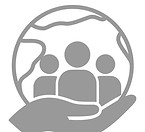
Care for People and Planet: People is the human side of learning: values, kindness, honesty, craft and community. Planet is the natural side: the elements, the lands and the living things that depend on them. Every THINAI project ends with an action so that learning changes what you do, not only what you know.

Why it works for every age: A child can meet the five lands through a garden or seashore. A teenager can meet them through a science or design project. An adult can meet them thorough food, craft, health or work. The idea is the same for all, and the project grows with the learner.
Why THINAI?
Wildlife, climate, health, communities and cultures are all under strain, and these crises are linked in one web. THINAI answers them with learning that treats people, society and nature together. See the evidence and the case for THINAI.
I sit quietly in my village house near Thanjavur, Tamil Nadu, India, and watch the rain: before it, during it and after it. The sound of the rain is soothing. The colours of the clouds are amazing. The running water is a rich sight. It takes me back to my childhood.
In my school days we made paper boats and played in the water. When the clouds grew dark and thick, flying termites filled the air, colourful birds sang, and the soil gave out an earthy smell like no other. Rain was a celebration. Afterwards, red velvet mites rolled over the soil and earthworms moved here and there. We heard the deep voice of the frogs while our parents called us in for tea and snacks.
Now everything has changed. I see no insects in the air or in the soil. The water is polluted by chemical fertilizers and pesticides. We get either floods or drought. People now speak of a mass extinction, climate change and of the cost of industrial growth and modern ways of living. If we do not act now, we risk losing the living world that sustains us. We are living in a world of crisis.
Humanity does not face one crisis. It faces a web of them, and every species on Earth sits inside that web. This chapter sets out the evidence, so that the case for THINAI rests on facts.
1.1 A living planet in retreat
Wildlife is vanishing at a pace with no precedent in human history.
-
The WWF Living Planet Report 2026[i], published on 7 October 2026, finds that monitored wildlife populations are on average 73% smaller than in 1970. Freshwater populations have fallen 85%, land populations 69% and marine populations 59%. The report ties the losses to our energy, food and finance systems.
The climate is changing alongside it.
-
The World Meteorological Organization[ii] expects 2025 to rank as the second or third warmest year in a 176-year record. Its January to August 2025 average was 1.42 °C above the pre-industrial level. The past three years were the three warmest, and ocean heat reached record levels in 2024.
The land beneath us is also wearing thin.
-
The UN Convention to Combat Desertification reports[iii] that at least 100 million hectares of healthy land are lost each year (October 2023).
Soil, water, forests and pollinators are the base of every farm and every meal. When they fail, people go hungry and move. Scientists warn that Earth is living through a sixth mass extinction.
-
Ceballos et al. (2017)[iv] found that about 32% of the roughly 27,600 land vertebrate species they sampled are shrinking in numbers and range. The philosopher Toby Ord (2020)[v] judges the chance of an existential catastrophe for humanity this century to be about one in six. He describes these figures as informed judgements, not measured probabilities. The more solid warning is that the living systems that feed, water and heal us are being weakened, and that a far greater number of people could suffer long before our species is in danger.
All these facts frighten me. That is why the choices we make now, matter. Not only the planet, but individual persons are also stressed too.
1.2 Minds and bodies under strain
The pressure shows up inside people.
-
The World Health Organization[vi] reported on 2 September 2025 that more than one billion people live with a mental health condition. An estimated 727,000 people died by suicide in 2021.
Loneliness is part of the same story.
-
The WHO Commission on Social Connection[vii] found on 30 June 2025 that about one in six people are lonely. Between 17% and 21% of people aged 13 to 29 report feeling lonely, with teenagers highest.
The body suffers too.
-
The WHO fact sheet[viii] on noncommunicable diseases at least 43 million deaths a year from heart disease, cancer, lung disease and diabetes, 75% of all non-pandemic deaths. Diet, tobacco, alcohol, inactivity and polluted air are the main drivers, and all of them are shaped by how we live.
It is not necessary to be like this. People can be joyful. Not only individuals but also human communities are in severe danger.
1.3 Divided societies and economies
Why should people need to be poor while there is enough and more for everyone to eat.
-
About one in ten people worldwide still lives on less than US$ 3 a day, the World Bank's extreme-poverty line, according to data[ix] updated on 7 October 2026. Many more live just above it, one illness or one bad harvest away from falling back.
Discrimination keeps people there.
-
Women, ethnic and religious minorities, migrants, persons with disabilities, Indigenous peoples and the poor are shut out of schooling, work, land and voice. The World Economic Forum's Global Gender Gap Report 2025[x] says that full parity is still more than a century away.
While the division in society is becoming vast and the economies are failing, the politics and cultures are getting corrupted.
1.4 Fading democracy, fading cultures
The freedom to take part in decisions is shrinking.
-
The V-Dem Institute's Democracy Report 2026[xi] (March 2026) finds that about 74% of the world's people, roughly 6 billion, live in autocracies. There are now 92 autocracies and 87 democracies, so autocracies outnumber democracies for the second-year running.
Cultures are thinning as well.
-
In 2019 the UN[xii] warned that about four in ten indigenous languages may die. A language carries a people's way of farming, healing, cooking, counting seasons and caring for land. When it goes, that knowledge goes with it, often before anyone has written it down.
When the planet gives alarm, the people are in danger, the machines look deadlier. This frightens me the most.
1.5 Technology and media that shape us
Tools built to connect us now compete for our attention.
-
A WHO Europe study[xiii] of about 280,000 young people aged 11, 13 and 15 in 44 countries found that problematic social media use rose from 7% in 2018 to 11% in 2022. Problematic use means being unable to control one's use and feeling withdrawal or conflict when offline.
The larger worry is who decides what we see.
-
A few platforms and companies steer what billions read, buy, believe and vote for, while local voices and local knowledge are pushed aside. A child who learns the world mainly through a screen can learn very little about the soil, the neighbour or the elder next door.
Technology is not the enemy. Used wisely it can serve people and planet. The problem is technology without a purpose beyond profit and attention.
The problems are inter-connected. The situation looks bleak. But there is hope.
1.6 One web, one answer
Four clusters of crisis linked in one web. No crisis here stands alone. Lost soil feeds hunger and poverty, poverty feeds stress, stress and loneliness feed ill health, and screens and weak politics make it harder to see any of it clearly. A cure aimed at one strand will not hold.
THINAI starts from this view and builds learning that treats people, society and nature together.
********
References
[i] World Wide Fund for Nature. (2026, October 7). Living planet report 2026. https://www.worldwildlife.org/publications/2026-living-planet-report/.
[ii] World Meteorological Organization. (2025, November 6). 2025 set to be second or third warmest year on record, continuing exceptionally high warming trend [News release]. https://www.wmo.int/media/news/2025-set-be-second-or-third-warmest-year-record-continuing-exceptionally-high-warming-trend.
[iii] United Nations Convention to Combat Desertification. (2023, October 24). At least 100 million hectares of healthy land now lost each year [Press release]. https://www.unccd.int/news-stories/press-releases/least-100-million-hectares-healthy-land-now-lost-each-year.
[iv] Ceballos, G., Ehrlich, P. R., & Dirzo, R. (2017). Biological annihilation via the ongoing sixth mass extinction signaled by vertebrate population losses and declines. Proceedings of the National Academy of Sciences, 114(30), E6089–E6096. https://doi.org/10.1073/pnas.1704949114.
[v] Ord, T. (2020). The precipice: Existential risk and the future of humanity. Hachette Books.
[vi] World Health Organization. (2025a, September 2). Over a billion people living with mental health conditions – services require urgent scale-up [News release]. https://www.who.int/news/item/02-09-2025-over-a-billion-people-living-with-mental-health-conditions-services-require-urgent-scale-up.
[vii] World Health Organization. (2025b, June 30). Social connection linked to improved health and reduced risk of early death [News release]. https://who.int/news/item/30-06-2025-social-connection-linked-to-improved-heath-and-reduced-risk-of-early-death.
[viii] World Health Organization. (n.d.). Noncommunicable diseases [Fact sheet]. Retrieved October 12, 2026, from https://www.who.int/news-room/fact-sheets/detail/noncommunicable-diseases.
[ix] Our World in Data. (2026, October 7). Tracking how many people live on less than $3, $10, or $30 a day. https://ourworldindata.org/tracking-how-many-people-live-on-less-than-3-10-or-30-a-day.
[x] World Economic Forum. (2025, June 11). Global gender gap report 2025. https://www.weforum.org/publications/global-gender-gap-report-2025/.
[xi] V-Dem Institute. (2026, March). Democracy report 2026. University of Gothenburg. https://www.v-dem.net/documents/75/V-Dem_Institute_Democracy_Report_2026_lowres.pdf.
[xii] UN says four in every ten Indigenous languages may die. (2019, August 8). Business Insider India. https://www.businessinsider.in/un-says-four-in-every-ten-indigenous-languages-may-die/amp_articleshow/70586295.cms.
[xiii] World Health Organization Regional Office for Europe. (2024, September 25). Teens, screens and mental health [News release]. https://www.who.int/europe/de/news/item/25-09-2024-teens--screens-and-mental-health
*********
Prof. Dr. John Britto Parisutham @ Uyirmeiyyar
Founder/CEO, John Britto Academy (JOBA)
Australia

The Six Domains
THINAI looks at sustainability from six sides: Technology, Humanities and Social Sciences, Intelligence, Natural and Applied Sciences, Arts & Aesthetics and Innovative Competencies. Together they give learners the whole picture and not a single subject. Choose a domain to see its themes and projects.
Each domain looks at sustainability from a different side. Click a domain below to see its clusters, themes and projects:
-
Technology: Tools that serve people and planet, from indigenous know-how to emerging technology.
-
Humanities and Social Sciences: How people live, think and govern themselves, in language, history, ethics and society.
-
Intelligence: Ways of thinking that help us decide well, including logic, data, systems thinking and emotional intelligence.
-
Natural and Applied Sciences: The natural world, from energy and materials to ecology and climate, and how to apply science to farming and community life.
-
Arts & Aesthetics: Creating and enjoying beauty through art, music, dance, craft and design.
-
Innovative Competencies: Turning ideas into action through design, enterprise, leadership and community problem-solving.
Learning for Every Age
Every THINAI Project comes in three versions, so a child, an young person and an adult can learn the same topic at the level that suits them. Learners choose their age group in the app and start from there. See how THINAI fits every age.
Children under 18 learn by making, playing and asking questions, with clear steps and simple words. You gain curiosity, confidence and the habit of learning by doing.
Youth from 18 to 25 learn by projects that build skills, with measuring, designing and improving. You gain skills for study, work and enterprise that you can show to others.
Adults over 35 learn by projects that connect to home, livelihood and community, using your own experience. You gain fresh skills, deeper understanding and a way to share what you know.
One topic, three levels Take the Solar Cooker project. Each age group works on the same idea of turning sunlight into heat.
The depth, the tasks and the questions change with the learner.
Learn together. Because the topic is the same, families, classrooms and community groups can learn side by side and talk about what they found.
How a Project Works
Every THINAI project follows five steps: At a glance, Analysis, Activity, Assessment and Action. A project is finished when the learner changes something in daily life, not when the screen is closed. Walk through a project from start to finish.Six Domains page: links to the individual domain pages.