


2026 October - Exploring Collaboration with Al-Bukhary International University (AIU): Micro-Credential Courses and Community Engagement


Mr. Manoharan and I visited Al-Bukhary International University (AIU), Alor Setar, Kedah, to reconnect with the university and explore opportunities for collaboration in the areas of micro-credential courses and community engagement.
The visit was personally meaningful to me because of my long association with AIU. I had previously worked at the university and was involved in its educational and community-oriented initiatives. During my time there, I also came to know Puan Norpisah Mat Isa , who was serving as the Registrar of AIU. I have known her since around 2012, and she has remained an important connection with the university.
Our visit provided an opportunity not only to reconnect with former colleagues but also to revisit the campus and reflect on its development since my earlier association with the university.
Arrival and Stay at the AIU Campus
Mr. Manoharan and I travelled from Penang to Alor Setar and arrived at AIU in the evening. Puan Norpisah kindly arranged accommodation for us at the university's guest accommodation.
Later that evening, she invited us to attend a Tenants' Dinner held at the Library Café on the AIU campus.
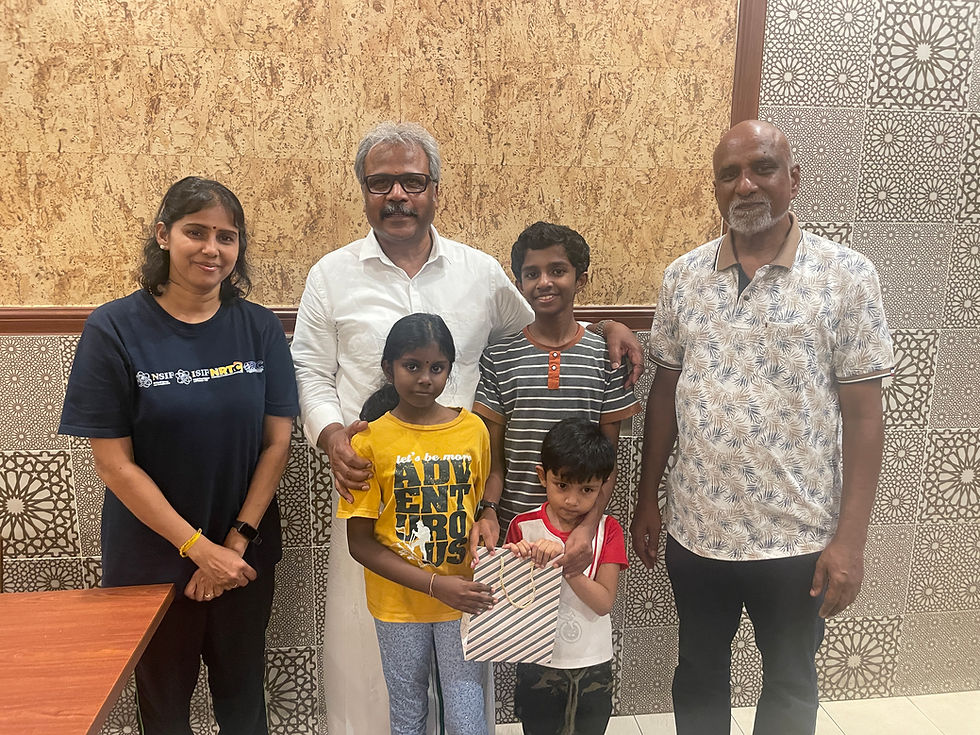
The dinner brought together lecturers, professors and university staff along with their families and children. It provided an informal and welcoming environment to reconnect with members of the AIU community.
We learned that the gathering was particularly meaningful because some members of staff had returned after visa-related interruptions, while several new lecturers had recently joined the university. The dinner therefore created an opportunity for staff members and their families to reconnect and build relationships.
Discussions with the AIU Leadership and Community Engagement Team
Before the arrival of the Vice-Chancellor, Mr. Manoharan and I had the opportunity to meet Ts. Abu Bakar Ngah , who is involved in community engagement activities at AIU. We exchanged initial ideas regarding possible community-based initiatives and future collaboration.
During the dinner, I was seated near the Vice-Chancellor and President of AIU, Professor Dato' Dr. Muhammad Saleh bin Jaafar. Our conversation gradually developed into a fruitful discussion about education, sustainability and community development.
I introduced the emerging THINAI programme, its educational philosophy and its potential as a community education and action model. The Vice-Chancellor showed considerable interest in the possibility of collaborating with JOBA.
The dinner also gave us an opportunity to meet and interact with several lecturers, professors and their families. These informal conversations helped create a positive foundation for future engagement.
Revisiting the AIU Campus
During the visit, I had the pleasure of showing Mr. Manoharan around the AIU campus. We visited and viewed several important parts of the university, including:
The distinctive architectural buildings
Lecture theatres
The university library
Foundation Studies facilities
Student hostels
The wider campus landscape and environment
Mr. Manoharan was particularly impressed by the architectural beauty and overall environment of the AIU campus. The visit helped him gain a better understanding of the university's physical environment and its potential as a setting for educational, sustainability and community engagement initiatives.
Follow-Up Discussion in Kuala Lumpur
Two days later, we had another important opportunity to meet the Vice-Chancellor at the Islamic Arts Museum Malaysia in Kuala Lumpur.
By this time, our discussions had progressed further, and we were able to present a more developed model for possible collaboration. We explained the emerging Malaysian Garden Model, which places importance not only on conventional educational elements such as campus facilities, books, marks and examinations, but also on the wider living environment.
The model emphasises the importance of:
Recognising and protecting the life and existence of other species
Developing ecological and social consciousness among students
Connecting learning with the real needs of communities
Encouraging students to apply their knowledge and skills for the betterment of society
Creating meaningful engagement between universities and surrounding communities
The underlying philosophy is that a university should not exist as an isolated academic institution. The university can become the heart of the community, connecting knowledge, values, skills and innovation with the needs of people, society and the wider ecological environment.
The Vice-Chancellor responded positively to these ideas and expressed his interest in developing collaboration between AIU and JOBA.
Proposed Areas of Collaboration
The discussions opened the possibility of collaboration in two important areas:
1. Micro-Credential Courses
JOBA and AIU can explore the development and delivery of micro-credential courses, including courses related to THINAI, sustainability, community engagement and related competencies.
2. Community Engagement
The collaboration can also explore opportunities for applying educational knowledge and skills through meaningful engagement with nearby communities.
These discussions represent an encouraging beginning for a possible partnership between AIU and JOBA. The next stage will be to further explore suitable models, course structures, institutional requirements and practical opportunities for implementation.
Looking Forward
The AIU visit was significant not only because it reconnected me with an institution where I had previously served, but also because it opened a new possibility for the future.
The journey has now come full circle: from my earlier work at AIU in education, environmental awareness and community engagement to the possibility of returning through a new partnership involving THINAI, micro-credentials and community transformation.
The proposed collaboration has the potential to bring together university education, sustainability, practical skills and community engagement, helping students and communities become active participants in creating a more socially conscious and ecologically sustainable future.
*********


Comments